THE SHORT ANSWER
For a typical 12 × 12 bedroom, plan on 2 to 3 gallons of wall paint.
That assumes eight-foot walls, one door, two windows, and two finish coats. Two gallons work only when the exact paint covers at least 333 square feet per gallon. If its label gives a lower rate, or only a 250 to 400 range you cannot narrow for your wall and application method, plan on three.
This is a useful starting floor, not a substitute for the product label. Your wall size, color change, sheen, surface condition, and paint can move the number.
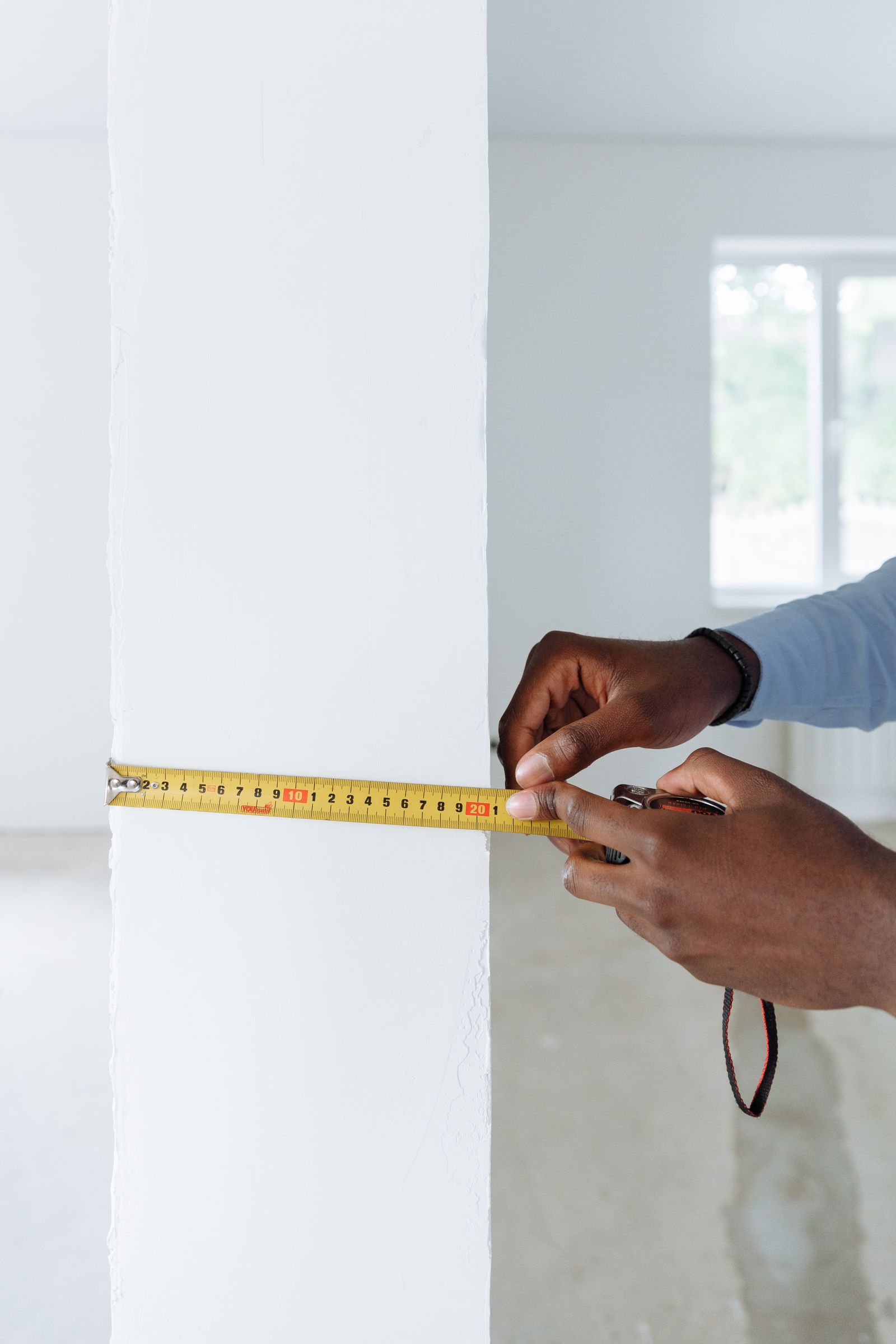
Find the coverage number on the exact can you will buy
The coverage number is usually printed on the back label. You can also find it on the manufacturer’s product page or technical data sheet. Look it up after you choose the product and sheen, because a coverage figure remembered from another paint does not belong in this calculation.
The current BEHR Ultra Interior Eggshell product page lists 250 to 400 square feet per gallon, depending on application method and surface porosity. That page also says the figure does not include spray loss. Other paints and other sheens can publish different numbers.
Eggshell is used in the examples because the cited product is an eggshell paint intended for rooms including bedrooms. It is not a universal bedroom rule. If you choose flat, matte, satin, or semi-gloss, return to that exact product and sheen and use its own coverage figure.
Set one calculation scope before you measure
Put only matching surfaces in one calculation: the same product, color, sheen, application method, and finish-coat count. Paintable wall area means the included wall area for one coat after doors and windows are removed. Primer is a separate product and a separate quantity.
This article calculates rolled or brushed bedroom walls. If you spray, use the product’s spray guidance and include its stated material loss. Without that instruction, the spray quantity is not settled.
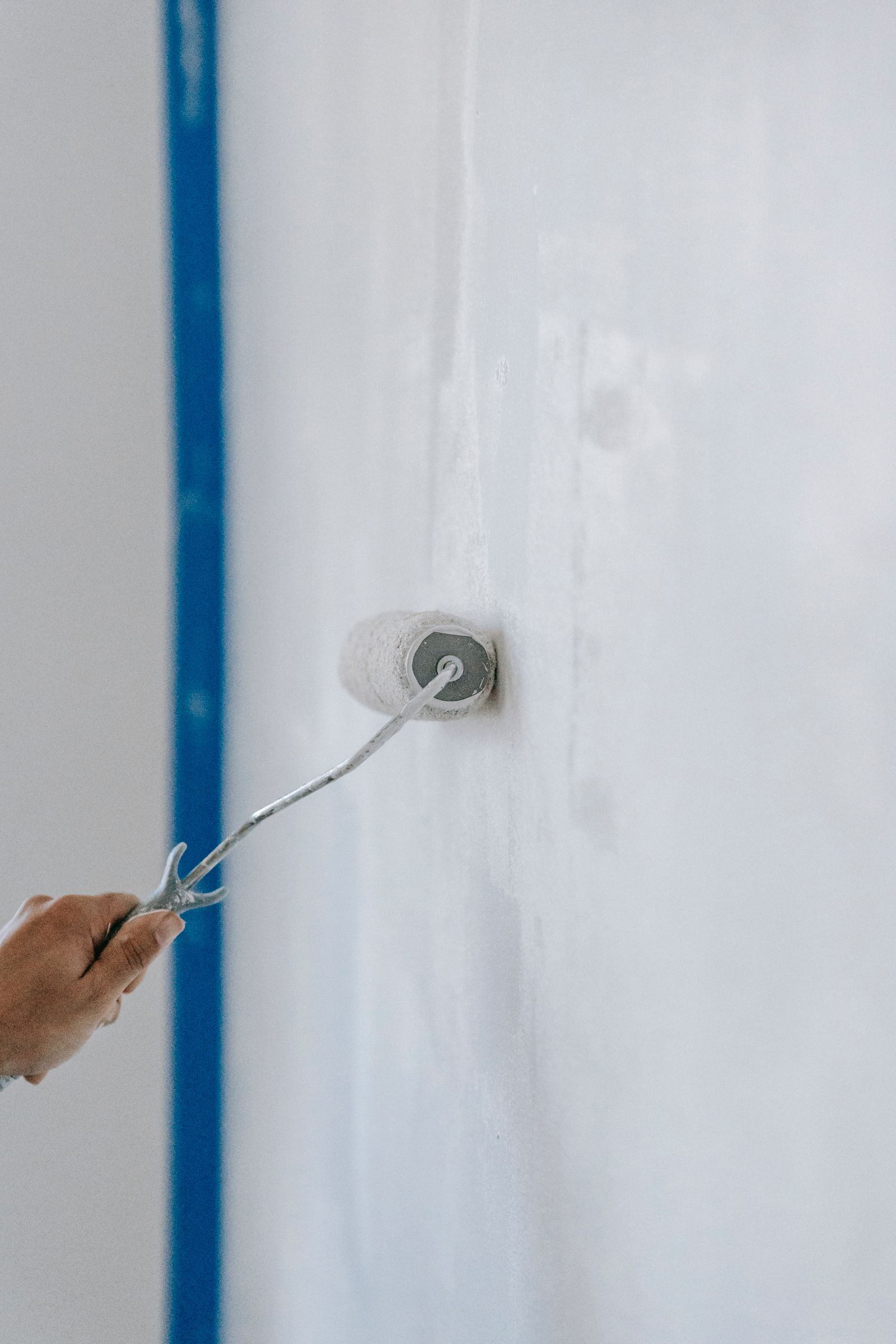
Add every wall, then subtract the large openings
Measure each wall’s width and height. Multiply width by height, then add the wall areas. Measure large doors and windows the same way and subtract them. Leave outlets, switch plates, and other small interruptions in the total.
THE WALL FORMULA
Total wall area = all wall widths × wall height
Paintable wall area = total wall area − doors and windows
Coat-area = paintable wall area × finish coats
Calculated gallons = coat-area ÷ the exact paint’s coverage rate
Split an irregular wall into simple rectangles. For a sloped section, calculate the rectangle and triangle separately. Triangle area equals base × height ÷ 2.
A dark-to-light change can break a two-coat estimate
Do not treat two finish coats as guaranteed simply because two is common. The cited BEHR instructions say certain colors may require additional coats for complete hide. They also direct painters to consider a tinted primer for drastic color changes or deep colors.
Painting a dark or saturated wall a pale color is exactly the kind of change that deserves attention before you buy. Patchy repairs, porous drywall, stains, and strong color contrast can also change the preparation or coat plan. Read the exact label and test the new color on the wall before locking the quantity.
If the coat count is unsettled, the purchase quantity is unsettled. Decide whether primer is needed and how many finish coats you are planning, then run the calculation.
Three ordinary bedrooms show where the answer changes
These examples assume eight-foot walls, one 3 × 7-foot door, two 3 × 5-foot windows, and two finish coats. They also assume one-gallon cans. Ceiling, trim, doors, closet, and primer are calculated separately.
| Bedroom | One coat | Two coats | Gallons at 250 / 300 / 350 / 400 sq. ft. |
|---|---|---|---|
| 10 × 10 | 269 sq. ft. | 538 sq. ft. | 3 / 2 / 2 / 2 |
| 12 × 12 | 333 sq. ft. | 666 sq. ft. | 3 / 3 / 2 / 2 |
| 12 × 14 | 365 sq. ft. | 730 sq. ft. | 3 / 3 / 3 / 2 |
The room name does not control the purchase. Wall area, openings, finish coats, exact coverage, and sold container sizes do.
When a coverage range changes the purchase, use the low end
The 12 × 12 example needs 666 coat-square-feet. Two gallons require at least 333 square feet per gallon because 666 ÷ 2 = 333. Rates of 350 or 400 support two gallons. Rates of 250 or 300 do not.
If the product gives only a 250 to 400 range and the label does not tell you that your surface and application qualify for the higher end, use 250. That produces three one-gallon cans. Do not award yourself the top of the range because it creates the cheaper answer.
Calculate ceiling, trim, doors, and closets on separate lines
If those surfaces are part of the bedroom job, they belong on the shopping list. They do not belong inside the wall calculation because they may use different products, sheens, colors, and coat counts.
- Ceiling: multiply room length by width, multiply by ceiling coats, then divide by the chosen ceiling paint’s coverage.
- Baseboards and casing: total their linear feet and follow the trim product’s label or calculator. Do not divide linear feet by a wall-coverage figure without accounting for the trim’s width.
- Doors: calculate width × height × painted faces × coats. Keep them separate when the door paint or sheen differs from the walls.
- Closet: treat it as a small second room. Add its walls only if the product, color, sheen, and finish-coat count match the bedroom.
You should leave this article with more than a warning that those surfaces are excluded. You should have a separate line for every one you intend to paint.
Convert the gallons into containers the paint actually sells
Purchase the smallest available container combination whose total volume covers the calculation. Four quarts equal one gallon. If only one-gallon cans are available, round up to the next whole gallon.
For example, 1.90 gallons becomes two one-gallon cans. A result of 2.22 gallons becomes two gallons plus one quart when that exact paint and color are sold in tintable quarts. Otherwise it becomes three one-gallon cans.
Compare current prices before choosing a larger package. Check the retailer’s return policy before assuming tinted or unopened paint can go back. The calculation already creates some leftover through container rounding, so do not add a second arbitrary buffer.
When you buy more than one container, follow the product instructions. BEHR directs users to intermix containers of the same product so the color and sheen stay uniform.
Stop when the shopping note answers every variable
Your wall-paint note is finished when it records paintable square feet, finish coats, exact product, color, sheen, application method, coverage rate and where you found it, calculated gallons, sold container sizes, and the combination you will buy.
Add separate lines for primer, ceiling, trim, doors, and closet when they are part of the job. Stop when every planned surface has enough product for every planned coat.
PAINT MY ROOM · IN DEVELOPMENT
Quantity settled? Put the entire weekend job in one place.
Paint My Room is being built to carry your measurements, wall condition, color, quantity, supplies, budget, and available hours into one plan. When one answer changes, the remaining work will change with it.
GET THE NEXT STEP
Join the waitlist and I’ll tell you when Paint My Room is ready to turn these numbers into a finished weekend job.