Use 20 minutes for arrival, 30 for one activity, 25 for food, 15 for cake, 20 for final play, and 10 for goodbyes. Keep the end fixed; take delays from final play.
Planning the whole party? The $15 fillable PDF puts the complete plan on your device. The $25 private Builder applies it to your guest count, venue, food route, budget, timing, and constraints.
Get the $15 Birthday PDF ↗Use the $25 Birthday Builder ↗
JUMP TO THE PART YOU NEEDOpen this guide’s sections
Use 20–30–25–15–20–10 as the two-hour default
The six blocks total exactly 120 minutes. For a 2:00–4:00 p.m. invitation, use these clock times.
Ten minutes for goodbyes is a Short Plan operating default. Use the venue’s longer required transition when one exists.
| Elapsed time | Clock time | Block | What happens |
|---|---|---|---|
| 0:00–0:20 | 2:00–2:20 | Arrival and open play | Children join without instructions while coats, bathrooms, waivers, and late arrivals settle. |
| 0:20–0:50 | 2:20–2:50 | Main activity | Use one planned activity or the venue’s included play. |
| 0:50–1:15 | 2:50–3:15 | Food | Wash hands, seat children, and serve the meal or substantial snack. |
| 1:15–1:30 | 3:15–3:30 | Cake | Use one short, child-led birthday moment. |
| 1:30–1:50 | 3:30–3:50 | Final play | Return to play or use the single backup. |
| 1:50–2:00 | 3:50–4:00 | Goodbyes | Collect coats and shoes, hand out favors if used, and end visibly. |
Choose the route before printing the invitation
Use the standard route when one activity, food, cake, and open play fit naturally. Select an alternate route now when meal timing, a venue schedule, or the birthday child’s limits control the day.
Meal-first route — 120 minutes
Use this route when the party begins at lunch or dinner. Have the food ready before guests enter.
| Time | Block | Minutes |
|---|---|---|
| 0:00–0:15 | Arrival | 15 |
| 0:15–0:40 | Food | 25 |
| 0:40–1:15 | Main activity | 35 |
| 1:15–1:30 | Cake | 15 |
| 1:30–1:50 | Free play | 20 |
| 1:50–2:00 | Goodbyes | 10 |
Fixed-venue example — 120 minutes
Copy the venue’s required blocks first. Reserve the final ten minutes for departures, place cake beside the food block, and let ordinary venue play fill any remainder. Remove the extra game.
| Time | Block | Minutes |
|---|---|---|
| 0:00–0:15 | Arrival and waivers | 15 |
| 0:15–1:05 | Venue activity | 50 |
| 1:05–1:30 | Venue food block | 25 |
| 1:30–1:45 | Cake | 15 |
| 1:45–1:50 | Return to venue play | 5 |
| 1:50–2:00 | Goodbyes | 10 |
Lower-load route — 90 minutes
Use a simple, ready-to-serve menu. Keep one familiar adult free throughout. The child may take the quiet break earlier or leave before 90 minutes.
| Time | Block | Minutes |
|---|---|---|
| 0:00–0:15 | Arrival | 15 |
| 0:15–0:40 | Child’s favorite activity | 25 |
| 0:40–1:00 | Simple food | 20 |
| 1:00–1:10 | Cake or quiet dessert | 10 |
| 1:10–1:20 | Quiet play or break | 10 |
| 1:20–1:30 | Goodbyes | 10 |
Put the guest end before the room-empty deadline
Write three times at the top of the plan: host access, guest start and end, and the deadline when every person and item must be out.
Invitation end = room-empty deadline − required teardown time.
If the room must be empty at 4:00 and packing takes 15 minutes, the invitation ends at 3:45. A full two-hour party would run 1:45–3:45. When host access cannot support that start, shorten the party or book a longer window. Do not print 2:00–4:00 when the contract requires the room empty at 4:00.
Keep the end fixed when the middle moves
Put the guest end on the invitation. Late arrivals join the current block; they do not restart the activity or move the goodbye.
Open gifts afterward. Public gift opening belongs in the schedule only when the birthday child wants it and you deliberately replace another named block.
Let good play replace the planned activity
Start with playground time, open toys, coloring, bubbles, or the venue floor. Children can enter without instructions while coats, bathrooms, waivers, and late arrivals settle.
If the group is still happily playing at 20 minutes, leave it alone and keep the planned activity as the backup. If the activity flops, stop it and reopen free play. A planned game has no claim on happy children.
Prepare one backup, then stop
Choose one option that starts quickly and can end without a long reset: freeze dance or coloring at home, chalk or bubbles at a park, or a quiet table activity at a venue.
The backup covers one failed activity, weather change, or need for calmer play. Once one option can do that job, stop planning games.
Start food setup ten minutes before the food block
Give one helper responsibility for plates, drinks, and ready-to-serve food ten minutes before the food block. In the default route, setup begins at 0:40 and children begin eating at 0:50.
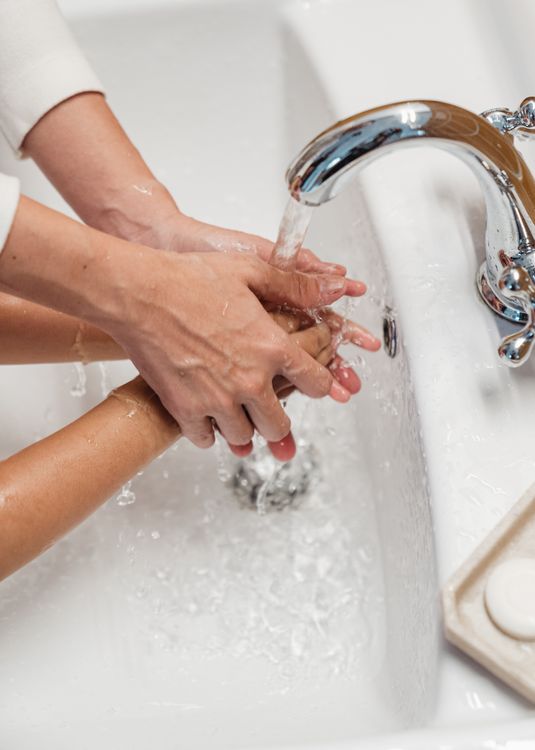
Build handwashing and seating into the food transition. Reserve time for handwashing, with extra time for younger children and anyone who needs assistance. If your group cannot wash and sit within the opening minutes, begin the transition earlier and take those minutes from activity or final play. Keep the fixed end.
Use the meal-first route for a lunch- or dinner-time start. When children become hungry earlier than expected, serve earlier and shorten final play.
Keep perishable food under temperature control
Keep cold food at 40°F or below and hot food at 140°F or above. Write down when perishable food leaves temperature control. Discard it after two hours at room temperature, or after one hour when the surrounding temperature exceeds 90°F. These are U.S. federal limits; another country’s food-safety authority controls elsewhere.
At a park, pack cold food with ice or frozen gel packs, keep a thermometer in the cooler, and keep the cooler shaded. Put out small amounts at serving time while the remainder stays cold.
Keep cake short and child-led
Candles, cake, and one short birthday moment fit inside 15 minutes. A formal photo session does not.
Skip singing or public attention when the child dislikes it. Serve dessert without asking the child to perform a reaction for the room.

Give one adult one timed job
Name one person, action, and minute: begin food setup at 0:40, gather children for cake at 1:15, or place coats by the exit at 1:45.
“Help with whatever” produces a polite audience. A timed assignment produces an owner. As a Short Plan safety rule, keep parent contact information in one known place whenever a child is dropped off, and make sure the helper can find it.
Stop setting up 20 minutes before arrival
Sixty minutes before, check the bathroom, trash, food area, activity, cake, and the supplies needed before guests enter. Thirty minutes before, confirm the helper’s timed job and tell the birthday child what happens first, when food and cake happen, and where to take a break.
Twenty minutes before, stop. Put away boxes and tools, wash your hands, use the bathroom, drink water, and become available to your child. Leave the unfinished decoration unfinished.
Match each failure to one recovery route
Use this table instead of improvising a new schedule in the room.
Closing line: “Thanks for coming. We’re wrapping up now.”
| What happens | Do this now | Where the time comes from |
|---|---|---|
| Children are playing well at 0:20 | Cancel the planned activity and leave it available as the backup. | No extra time needed. |
| Children become hungry before food | End the activity and serve. | Shorten final play. |
| The activity flops | Stop it and return to open play or the single backup. | Keep the original food time. |
| The birthday child becomes overwhelmed | Use the quiet place with the familiar adult while the helper continues. | Rejoin when ready or finish early. |
| The schedule runs 10–20 minutes late | Remove final play first. | Preserve the ten-minute goodbye. |
| The room deteriorates after food | Serve cake now if the child wants it, then begin goodbyes. Otherwise begin goodbyes immediately. | End early. |
| Goodbye time arrives | Stop the current block and say the closing line. | Nothing moves past the printed end. |
Finish with one activity, one backup, and a visible goodbye
You are done when the guest start and end are visible, the room-empty deadline still works, every required venue block is copied, food and cake have times, one helper has a timed job, and the birthday child has a break or early-exit route.
At the goodbye block, move coats and shoes to the exit and close the party. An unfinished game, unopened gift, or unused decoration can remain unfinished.